



Introduction
Choosing the right career path after school or college is one of the most important decisions in life. It influences your future income, personal growth, job satisfaction, and overall lifestyle. However, many students feel confused because they have too many options or very little guidance. Some follow family expectations, while others choose careers simply because their friends are doing the same. Unfortunately, these decisions may not always lead to long-term happiness or success.
The good news is that selecting the right career path does not have to be stressful. With proper planning, self-awareness, and research, you can make a confident decision that matches your interests, strengths, and future goals. Instead of rushing into a career, it is better to understand your personality, explore different industries, and evaluate the opportunities available in the job market.
Whether you have just finished school or recently graduated from college, this guide will help you understand the complete process of career selection. You will learn practical strategies, common mistakes to avoid, and expert advice that can make your journey easier. By the end of this article, you will have a clearer understanding of how to choose the right career path after school or college and prepare yourself for a successful future.
What Is Choosing the Right Career Path After School or College?

Choosing the right career path after school or college means selecting a profession that aligns with your skills, interests, values, personality, and long-term goals. It is more than simply finding a job that pays well. A suitable career should also provide opportunities to learn, grow, and enjoy your daily work.
Every individual has different talents and ambitions. Some people enjoy solving technical problems, while others are passionate about helping people, creating art, managing businesses, or teaching students. Understanding these preferences is the first step toward making a wise career decision.
Career planning is a continuous process rather than a one-time decision. As industries change and new technologies emerge, you may discover fresh opportunities that better match your abilities. Therefore, staying open to learning and adapting is an important part of building a successful career.
Why Is Choosing the Right Career Path Important?
Selecting the right career affects nearly every aspect of your future. A thoughtful decision can lead to financial stability, personal satisfaction, and professional success. On the other hand, choosing a career without proper research may result in frustration, stress, and frequent job changes.
Some key reasons why choosing the right career path is important include:
It helps you build confidence by working in a field you enjoy.
It increases your chances of long-term career growth.
It improves job satisfaction and work-life balance.
It allows you to develop valuable skills over time.
It helps you achieve financial independence.
It motivates you to continue learning and improving.
It reduces the likelihood of changing careers repeatedly.
A well-planned career decision creates a strong foundation for both your personal and professional life. Instead of chasing short-term trends, focus on choosing a career that matches your strengths and future aspirations.
Detailed Step-by-Step Guide
Step 1: Understand Yourself
The first step in choosing the right career path after school or college is understanding yourself. Before exploring different professions, identify your interests, strengths, weaknesses, and personal values.
Ask yourself questions such as:
What subjects do I enjoy studying?
What activities make me lose track of time?
What skills do people appreciate in me?
Do I prefer working with people, technology, numbers, or creative ideas?
What kind of lifestyle do I want in the future?
Writing your answers in a notebook can help you recognize patterns and make better career decisions. Self-awareness is the foundation of successful career planning.
Step 2: Identify Your Skills and Strengths
Everyone has unique abilities. Some skills come naturally, while others are developed through education and practice.
Your strengths may include:
Communication
Leadership
Problem-solving
Creativity
Teamwork
Time management
Analytical thinking
Organization
Once you identify your strongest abilities, look for careers where these skills are highly valued. This increases your chances of success and job satisfaction.
Step 3: Explore Different Career Options
Many students only know about a limited number of professions, such as medicine, engineering, teaching, or business. However, today’s job market offers thousands of exciting career opportunities.
Research industries that interest you and learn about:
Job responsibilities
Required education
Average salary
Career growth opportunities
Future demand
Working environment
Exploring multiple options helps you avoid making decisions based on incomplete information.
Step 4: Research Industry Trends
A career that is popular today may not offer the same opportunities in the future. Therefore, understanding industry trends is essential before making a decision.
Look for industries that continue to grow and create new jobs. Technology, healthcare, renewable energy, digital marketing, cybersecurity, finance, education, data analytics, and artificial intelligence are examples of fields experiencing steady demand in many parts of the world.
At the same time, avoid choosing a career based only on salary. A high-paying job may not be enjoyable if it does not match your interests or personality. Balance earning potential with long-term satisfaction.
Step 5: Set Clear Career Goals
Once you have explored different options, create realistic short-term and long-term goals.
For example:
Short-term goals
Improve communication skills.
Complete a relevant certification.
Learn basic computer skills.
Build a professional resume.
Apply for internships.
Long-term goals
Earn a professional degree.
Gain industry experience.
Develop leadership abilities.
Achieve financial independence.
Reach a management or specialist position.
Having clear goals keeps you focused and motivated throughout your career journey.
Step 6: Gain Practical Experience
Reading about a career is helpful, but practical experience provides a much clearer understanding.
Consider opportunities such as:
Internships
Volunteer work
Freelance projects
Part-time jobs
Job shadowing
College projects
These experiences help you discover whether a career truly matches your expectations. They also strengthen your resume and improve your employability.
Step 7: Seek Guidance from Experienced People
You do not have to make career decisions alone.
Talk to:
Teachers
Career counselors
Professors
Family members
Industry professionals
Successful graduates
Ask them about their experiences, challenges, and advice. Learning from others can save you from common mistakes and help you make informed decisions.
Step 8: Continue Learning and Improving
The learning process never stops after choosing a career. Employers value professionals who continuously improve their knowledge and skills.
Stay updated by:
Reading industry news.
Taking online courses.
Attending workshops and seminars.
Learning new software and technologies.
Developing communication and leadership skills.
Continuous learning keeps you competitive in an ever-changing job market.
Benefits of Choosing the Right Career Path
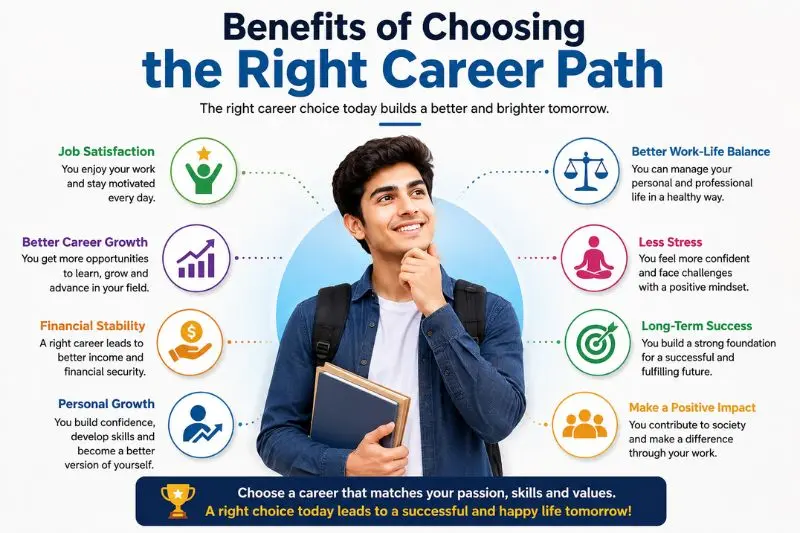
Making a thoughtful career decision offers many advantages.
Greater job satisfaction because your work matches your interests.
Better career growth opportunities.
Increased confidence in your abilities.
Higher motivation to learn and improve.
Improved financial stability over time.
Better work-life balance.
Reduced stress caused by career uncertainty.
Stronger professional reputation.
More opportunities for promotions.
Increased overall happiness and personal fulfillment.
Choosing wisely today can positively influence your future for many years.
Disadvantages and Risks of Poor Career Decisions
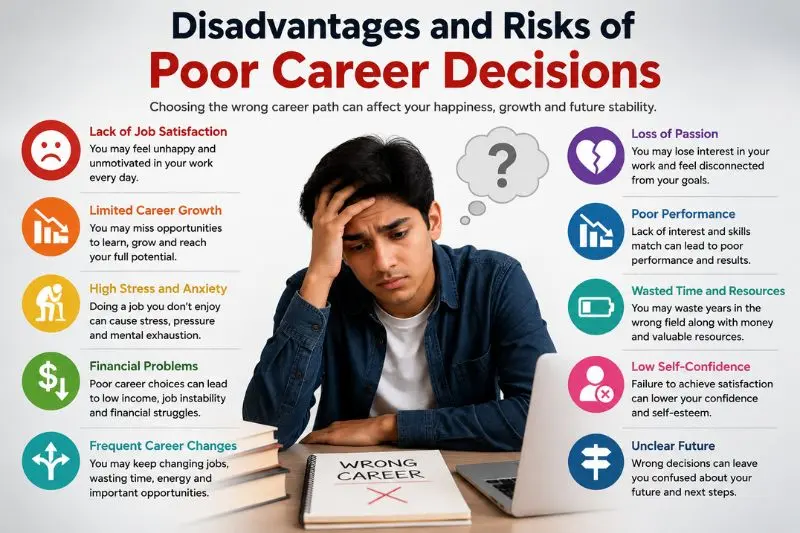
Selecting the wrong career can create several long-term challenges.
Lack of motivation at work.
Frequent job changes.
Difficulty maintaining work-life balance.
Increased stress and frustration.
Lower productivity.
Wasted time and educational investment.
Limited career growth.
Financial instability.
Reduced confidence.
Difficulty achieving personal goals.
These risks highlight why careful career planning is worth the effort.
Common Mistakes to Avoid
Many students make avoidable mistakes while choosing their careers.
Some of the most common include:
Following friends instead of personal interests.
Choosing a career only because it pays well.
Ignoring personal strengths and weaknesses.
Failing to research career opportunities.
Making decisions based on social pressure.
Avoiding internships or practical experience.
Not developing soft skills.
Giving up after facing small setbacks.
Ignoring future industry trends.
Waiting until graduation to think about career planning.
Avoiding these mistakes can significantly improve your chances of building a rewarding career.
When should I start planning my career?
The best time to start planning your career is during your school years. Early planning gives you enough time to understand your interests, improve your skills, explore different professions, and make informed educational choices. However, it is never too late to evaluate your goals and choose a new direction if needed.
What if I am interested in more than one career?
It is completely normal to have multiple interests. Compare each career based on your skills, education requirements, job opportunities, salary expectations, and long-term growth. You can also gain experience through internships or short projects before making a final decision.
Should I choose a career based only on salary?
No. While income is an important factor, it should not be the only reason for choosing a profession. A career that matches your interests, values, and strengths is more likely to provide long-term satisfaction, motivation, and success.
How can I discover my strengths?
You can identify your strengths by reflecting on subjects you enjoy, activities you perform well, feedback from teachers and family members, and achievements you have earned. Personality assessments, skill evaluations, and practical experiences can also help you
Can I change my career later?
Yes. Many successful professionals change careers during their lives. New skills, additional education, certifications, and practical experience can help you transition into a different field. Career changes require planning, but they are often rewarding when they align with your interests and goals.
Is higher education always necessary for a successful career?
Not always. While many professions require a university degree, others value technical training, certifications, apprenticeships, and practical experience. Research the qualifications needed for your preferred career before deciding on your educational path.
Expert Tips and Bonus Points
The following practical tips can help you make smarter career decisions and prepare for long-term success.
Focus on developing both technical and soft skills.
Improve your communication and problem-solving abilities.
Build a professional resume early.
Create a portfolio if your career involves creative or technical work.
Learn basic financial management skills.
Stay informed about changing job market trends.
Build a strong professional network.
Seek internships whenever possible.
Remain flexible and open to learning new skills.
Review your career goals every year and adjust them as your interests and opportunities evolve.
Remember that success rarely happens overnight. Consistent effort, patience, and continuous improvement are the keys to building a fulfilling career.
Conclusion
Choosing the right career path after school or college is one of the most valuable investments you can make in your future. Instead of making decisions based on pressure, trends, or assumptions, take the time to understand yourself, identify your strengths, research different career options, and gain practical experience. Every step you take today contributes to a stronger foundation for tomorrow.
Career planning is not about finding a perfect profession immediately. It is about making informed decisions, learning from experiences, and adapting as opportunities change. Even if your first choice does not work exactly as planned, the skills and knowledge you gain will continue to support your growth.
Stay curious, continue learning, and never hesitate to seek advice from experienced professionals. With determination, careful planning, and a willingness to improve, you can confidently choose the right career path after school or college and build a future filled with purpose, success, and personal satisfaction. The journey may take time, but every thoughtful decision brings you one step closer to achieving your dreams and creating a meaningful professional life.
