


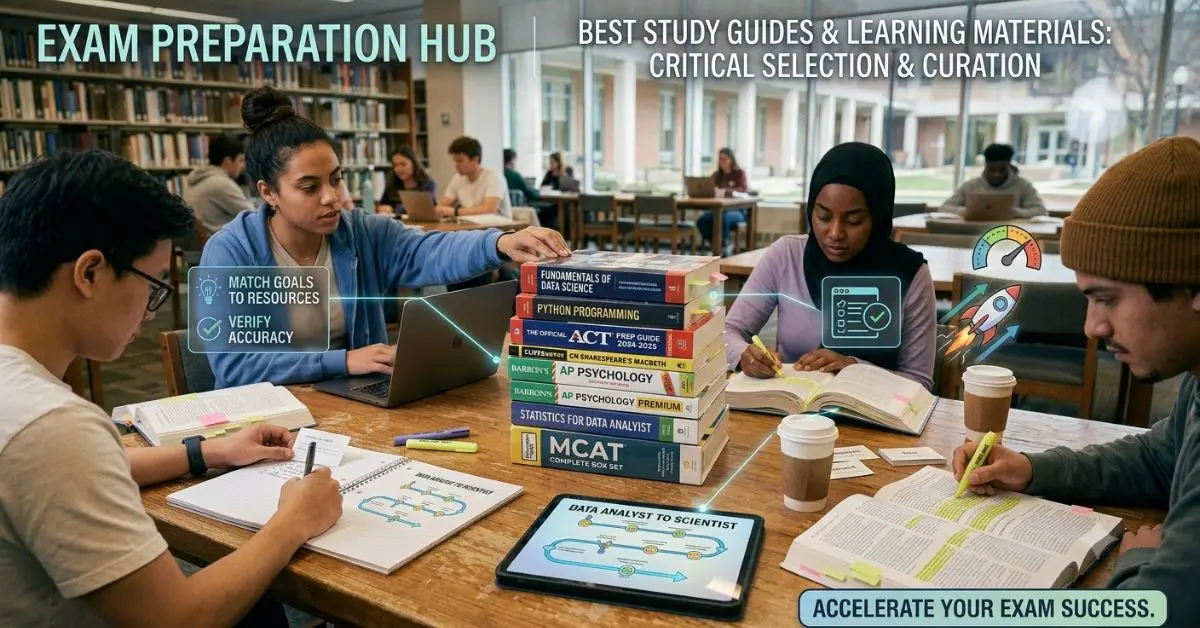
Introduction
Preparing for exams can feel overwhelming, especially when students are unsure about where to start or which study materials to use. With so many books, online resources, notes, and practice tests available, choosing the best study guides and learning materials for exam preparation becomes a crucial step toward success. The right resources can make studying more structured, efficient, and less stressful.
In today’s competitive academic environment, students need more than just textbooks. They need well-organized study guides, practice papers, revision notes, and digital tools that help them understand concepts clearly and retain information for longer periods. Without proper guidance, even hardworking students may struggle to achieve their desired results.
Many learners make the mistake of collecting too many resources without actually using them effectively. This leads to confusion and wasted time. On the other hand, students who carefully select high-quality study materials often perform better because they focus on clarity, consistency, and practice.
This guide will help you understand how to choose and use the best study guides and learning materials for exam preparation. You will also learn their importance, benefits, common mistakes, and expert strategies that can improve your study routine. By the end, you will have a clear roadmap to prepare smarter and achieve better exam results.
What is Best Study Guides and Learning Materials for Exam Preparation?

Best study guides and learning materials for exam preparation refer to carefully selected educational resources designed to help students understand, revise, and practice academic subjects effectively. These materials include textbooks, revision notes, sample papers, online courses, flashcards, and practice tests.
Unlike general reading materials, study guides are structured specifically to support exam success. They break down complex topics into simple explanations, highlight important concepts, and often include exercises to test understanding.
These resources are used by students at all levels, from school exams to competitive tests. They are designed to save time and improve learning efficiency by focusing only on the most relevant content needed for exams.
Why is Best Study Guides and Learning Materials for Exam Preparation Important?

Using the best study guides and learning materials for exam preparation is essential because they directly impact how well students understand and retain information. With proper materials, students can study smarter instead of harder.
First, they provide clarity. Well-structured guides simplify difficult topics and make them easier to understand.
Second, they improve focus. Instead of reading unnecessary content, students concentrate only on exam-relevant topics.
Third, they enhance revision. Study guides often include summaries, key points, and practice questions that help in quick revision before exams.
Finally, they boost confidence. When students use reliable materials, they feel more prepared and less anxious during exams.
Detailed Step-by-Step Guide to Using Study Guides Effectively
Step 1: Understand Your Exam Requirements
Before selecting any study material, it is important to understand your exam syllabus and format. This includes:
- Subject topics
- Weightage of chapters
- Type of questions (MCQs, essays, problem-solving)
Knowing these details helps you choose relevant study guides and avoid unnecessary content.
Step 2: Choose High-Quality Study Guides
Not all study materials are equally effective. Look for guides that are:
- Updated according to the latest syllabus
- Written in simple language
- Organized chapter-wise
- Include practice questions and answers
High-quality materials save time and improve understanding.
Step 3: Combine Textbooks with Revision Notes
Textbooks provide detailed knowledge, while revision notes summarize important points. Using both together creates a balanced study approach.
For example:
- Use textbooks for concept learning
- Use notes for quick revision
This combination improves retention and clarity.
Step 4: Practice with Past Papers
One of the most effective strategies is solving past exam papers. This helps students understand question patterns and time management.
Benefits include:
Familiarity with exam format
Improved speed and accuracy
Better understanding of important topics
Step 5: Use Digital Learning Materials
Modern students also benefit from digital resources such as:
- Online mock tests
- Video lectures
- Interactive quizzes
- PDF study guides
These tools make learning more flexible and engaging.
Step 6: Create a Study Schedule
A structured study plan is essential for effective preparation. Divide your time based on subjects and difficulty levels.
Example plan:
- Morning: New topics
- Afternoon: Practice questions
- Evening: Revision
Consistency improves performance significantly.
Benefits of Best Study Guides and Learning Materials for Exam Preparation
- Simplifies complex topics for better understanding
- Improves exam performance and scores
- Saves time by focusing on important topics
- Enhances revision efficiency
- Builds confidence before exams
- Helps with structured learning
- Supports self-study without coaching
Disadvantages / Risks
- Too many study materials can cause confusion
- Low-quality guides may contain outdated information
- Over-reliance on guides may reduce deep learning
- Lack of discipline can reduce effectiveness
- Some resources may not match exam syllabus
Common Mistakes to Avoid
Many students struggle because they make avoidable mistakes:
- Collecting too many books and notes
- Ignoring syllabus guidelines
- Not practicing past papers regularly
- Memorizing without understanding concepts
- Studying without a proper schedule
- Switching resources frequently
Avoiding these mistakes can significantly improve exam preparation results.
FAQs
What are the best study guides for exam preparation?
The best study guides are those that match your syllabus, explain concepts clearly, and include practice questions for revision.
Are digital study materials effective?
Yes, digital materials like online tests and video lessons are highly effective when used consistently along with traditional books.
How many study resources should I use?
It is best to use 2–3 high-quality resources instead of multiple confusing ones. Focus on depth rather than quantity.
How important are past papers?
Past papers are extremely important because they help you understand exam patterns, question styles, and time management.
Can study guides replace textbooks?
No, study guides should complement textbooks. Textbooks build concepts, while guides help with revision and exam practice.
How can I improve exam performance quickly?
Focus on structured study, regular practice, revision notes, and solving past papers consistently.
Expert Tips & Bonus Points
- Always start preparation early instead of last-minute studying
- Focus on understanding concepts rather than memorizing
- Revise regularly using short notes
- Practice under timed conditions for better exam readiness
- Use color-coded notes for better memory retention
- Stay consistent rather than studying in long irregular sessions
- Review mistakes from practice tests carefully
These strategies can significantly improve your exam preparation efficiency.
Conclusion
Choosing and using the best study guides and learning materials for exam preparation is one of the most important steps toward academic success. With the right resources, students can simplify complex topics, stay organized, and improve their overall performance.
Effective exam preparation is not about collecting endless books or notes. Instead, it is about selecting high-quality materials and using them consistently with a clear study plan. When students focus on structured learning, they save time and achieve better results.
Study guides, revision notes, past papers, and digital tools all play an important role in building strong exam readiness. However, success depends on how effectively these resources are used.
Ultimately, students who combine discipline, smart planning, and the right study materials are more likely to perform well in exams. By following the strategies discussed in this guide, learners can build confidence, reduce stress, and achieve their academic goals with greater ease.
